
Book Acclimatisation

Your books have arrived from the cold. Why it pays to wait before opening the boxes
As the gift-giving season approaches, waiting for a delivery somehow feels even harder. And when those boxes contain a magazine, photo book or publication that has taken months to create, the first instinct is to open them straight away.
During the colder months, however, patience really is a virtue.
A shipment can arrive in a warm office after spending hours in a cold truck or warehouse. It may seem unlikely that a temperature change alone could affect a finished book, but paper is a hygroscopic material: its fibres absorb and release moisture depending on the surrounding environment. When very cold paper is unpacked in a warm room, the air around it can cool below the dew point and condensation may form. The paper can then absorb that moisture, which may lead to curling, waviness or deformation of the book block or cover.
Let the shipment warm up first
When books or magazines arrive cold, the best first step is often to do nothing.
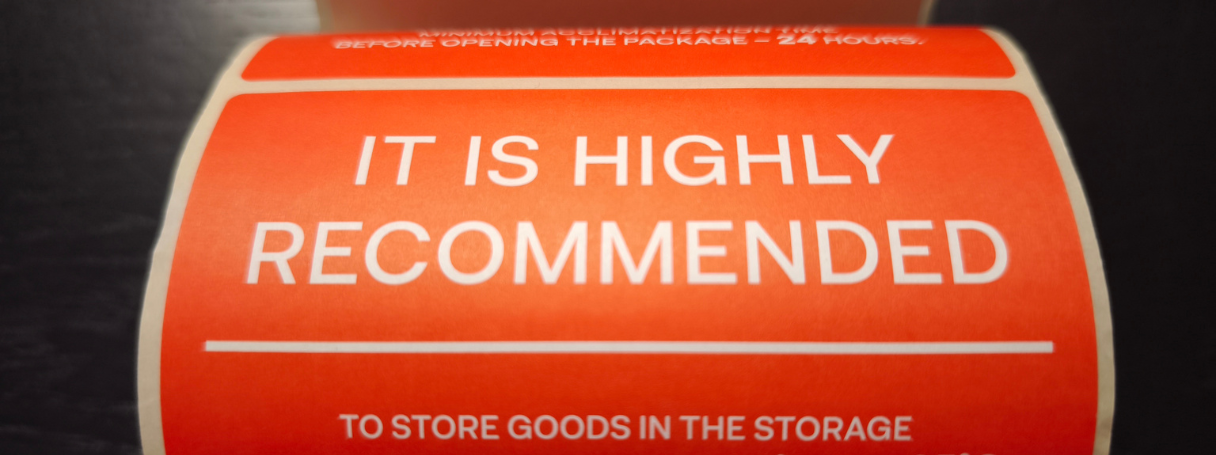
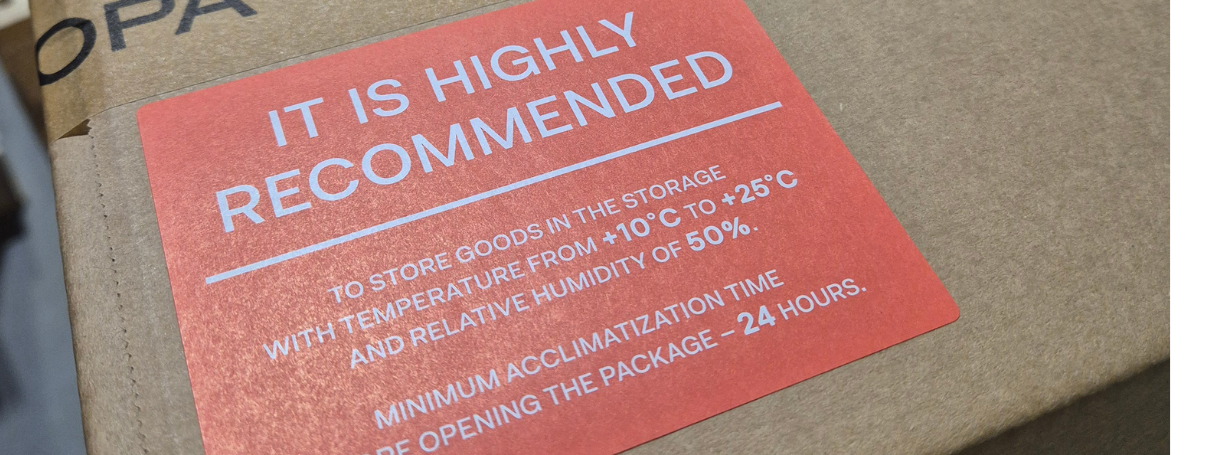
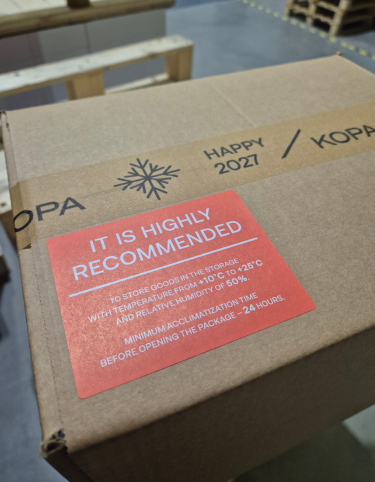
Move the boxes or pallet into a room with a stable temperature and leave the packaging closed while the shipment gradually adjusts to its new environment. The packaging acts as a protective barrier, helping the temperature change more slowly and reducing the paper’s sudden exposure to warmer, more humid air.
How long acclimatisation takes depends on how cold the shipment has become. As a general guide, printed products arriving at around 0 °C may need approximately 24 hours, at –10 °C around 48 hours, and at about –20 °C as much as 78 hours before unpacking. During this time, the products should remain packaged in a stable indoor environment of roughly 19–23 °C.
Trying to speed things up by placing the boxes next to a radiator is not a good shortcut either. Books and other printed products respond best to stable temperature and humidity, while sudden changes increase the risk of paper and binding distortion.
Print production does not quite end when the finished run leaves KOPA. During the colder months, the final step in protecting the quality of a long-awaited publication can be remarkably simple: let the shipment warm up gradually, then open the boxes and enjoy the result.